

Brutalism is an architectural style that emerged in the mid-20th century, mainly after the Second World War, characterised by the expressive use of exposed materials, massive geometric forms and a deliberately raw and functional aesthetic. Its name comes from the French term béton brut (“raw concrete”), popularised by Le Corbusier, one of its main proponents. More than an ornamental style, Brutalism seeks to show material honesty and unadorned structure, resulting in robust, monumental buildings with a strong sculptural character. This movement reflects ideals of functionality, transparency and a social approach to architecture, leaving a powerful and distinctive mark on the urban landscape.
The Raw Side of Art.
-Where the path begins.-
From this concept arises my Neo-Brutalist proposal, a personal evolution of Brutalism that maintains its essential values: the priority of the material as the protagonist, constructive sincerity and the absence of artifice. In my pieces, the main elements are shown as they are, without makeup or ornaments that hide their true nature. This approach seeks to preserve the raw and authentic essence of the original style, reinterpreting it from a contemporary perspective that highlights the strength, texture and truth of each material.


"The elements change with time, but the essence is what endures beyond it."
This is a photograph showing exactly how the piece now known as ‘The Mammoth’ was found. And in the other photograph, we can see the finished artwork.
Texts from Salvador De La Vallina.


Throughout the entire creative process, everything – from the pieces I select to curate and transform into artworks, to the places where I carry out my activities – has been the result of, and a response to, following my instinct. Both in terms of guiding myself and carrying out my work.
My space and time.
Alongside the enduring elements.
The first workshop where the earliest works of art were created.

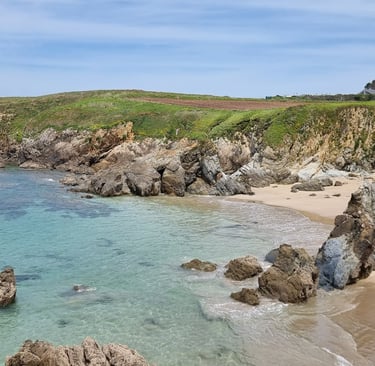
Location.
Tapia de casariego, Asturias, Spain.
This project originated and is currently being developed in north-western Spain, more precisely in Asturias.